
For a long time, weight loss to the general population seemed to be associated with just “healthy eating.” While for many it still is, the phrase “calorie deficit” has finally made it into the mainstream, with many people knowing one is required in order to lose fat. The idea of a calorie deficit is a simple one– eat less calories than you burn– but executing one may be more difficult.
With calorie deficits becoming the well-known result of an energy balance equation, it is frequently associated with counting calories, with many people even equating the two. Today, we will take a deep dive into the difference between counting calories and a calorie deficit, and examine whether you really need to track calories or macros in order to reach your fat loss goals.
What is calorie deficit?
A calorie deficit is eating less than you burn. It is important to not equate calories burned with calories burned from exercise. Frequently I see in TikTok comment sections– “How am I supposed to lose weight eating 2000 calories when I only burn 500 calories a day from my workouts?” Your total calories burned in a day is your total daily energy expenditure (TDEE), and it is made up of much more than just your calories burned from exercise. Let’s take a look at a TDEE equation.
TDEE = BMR + NEAT + TEF + EAT
Okay, so what the heck does that mean? Let’s break it down.
BMR: Basal metabolic rate. The amount of calories you burn at rest from your body doing it’s typical bodily things like breathing, pumping blood, all that fun stuff. It is the amount of calories you would burn if you were awake and laying in bed the entire day and did not move.
NEAT: Non-exercise activity thermogenesis. This is made up of all non-exercise movement from things like washing the dishes, taking a shower, going up the stairs, going on a walk, fidgeting, typing, etc. Often, this is what coaches will tell the average person to increase for general health and also fat loss goals.
TEF: Thermic effect of food. This is the amount of calories you burn from digesting food. Different foods and macronutrients have a different effect on this, with protein having the highest TEF.
EAT: Exercise activity thermogenesis is the one we know, and it’s any calories burned from intentional exercise like lifting, cardio, fitness classes, etc.
So now that we know what your TDEE is, a calorie deficit is eating less than your TDEE. Calories in versus calories out, often shortened to CICO in social media. There are things like food intolerances, hormones, etc. that can lead to increases or decreases in your calories in (like absorption) or calories out (like affecting your BMR) and thus will determine what your calorie deficit is, but if you are in a calorie deficit you will lose fat.
How many calories should I eat?
In this blog, I will not go into the nitty gritty details and staying at a high level. This is a very nuanced topic and will vary from person to person and the best way to understand how many calories you should be eating for your goals is to work with a dietitian. However, you can also trial and error yourself (and/or with the assistance of a coach) by using TDEE equations and subtracting calories from there. For simplicity, I recommend the TDEE calculator, Precision Nutrition calorie calculator, or Macros Inc calorie calculator (Macros Inc also has a free Facebook group that can help you get a more accurate estimate). These calculations take your body stats and your activity level into account to calculate an estimate.
The less data you have to give these equations, the less accurate they are going to be, so it will take some trial and error. If you eat at your calculated TDEE for a couple weeks, which would be your maintenance calories, and you don’t gain weight, then you know your calculation is accurate enough to build off of. From there, you can subtract calories. The general recommendation is to subtract 15-20% from your maintenance calories.
The rule of thumb for weight loss is a rate of 0.5 – 2.0lbs per week, with 2lbs being on the aggressive end, and 1lb a week being about average. One pound of fat contains 3500 calories of energy, so that averages 500 calories under maintenance per day to lose a pound of fat a week.
So, if your TDEE calculation is 2500 calories a day, then you will want to eat ~2000 calories a day for a rate of losing 1lb per week. If you eat more than 2000 calories but still less than 2500, you will still be in a deficit but you will lose at a slower rate. If you eat less than 2000 calories, you would be in a more aggressive deficit.
What is the difference between counting calories and a calorie deficit?
Now we know what a calorie deficit is. It is important to not equate a calorie deficit to counting calories. A calorie deficit results from eating less than you burn due to the energy balance equation. Counting calories is specifically keeping track of what you are eating to be aware of your intake. You can be in a calorie deficit, intentionally or unintentionally, without ever counting a single calorie. You can count your calories and still not be in a deficit. Counting calories is for your awareness and it is a common tool to help be aware of whether one is in a deficit, because it gives you access to many data points and helps you adjust your calories as needed.
You don’t need to track calories or macros if you don’t want to, but it sure does help to let you know where you are at in relation to your goals. If you decide one day you want to spend less money and save some, you don’t necessarily have to track your expenses. But it sure would help. I am wildly off every time I try to guesstimate how much money I spend in a month– it is almost always over what I expect, whether it’s ten dollars or hundreds of dollars. Similar to money, people wildly underestimate how many calories they are really eating. Without tracking, it can make it difficult– but not impossible– to stay in a calorie deficit.
What is the difference between weight loss and fat loss?
It is important to note that I have been intentional in my wording throughout. A calorie deficit is necessary for fat loss, not necessarily for weight loss. You can lose weight from drinking less water than you usually do, from going to the bathroom, from losing muscle mass or even bone tissue. Losing water weight is not going to do much for your physique, and you certainly don’t want to be losing muscle or skeletal mass. Fat loss is what most people are looking for when they say weight loss. They want to look leaner or more “toned.” Thus, it is important to not equate fat loss and weight loss. In fact, you can lose fat and look leaner while overall gaining weight if you are putting on muscle or holding more water weight.
How do I count calories?
While you can count calories from just looking at a nutrition label and eyeballing your food, it is not recommended and can be wildly inaccurate. Additionally, only looking at calories and not looking at the makeup of your food may not give you the full picture. Thus, I recommend tracking macros as opposed to tracking calories.
How do I track macros?
Macros are short for macronutrients, which our bodies require in large quantities. They include protein, carbs, and fats. Protein and carbs are 4 calories per gram and fats are 9 calories per gram. Then, there is also alcohol which is not a macronutrient but it does contain energy at 7 calories per gram. Because macros each correlate to a certain amount of calories, macro tracking includes calorie counting but calorie counting does not include macro tracking.
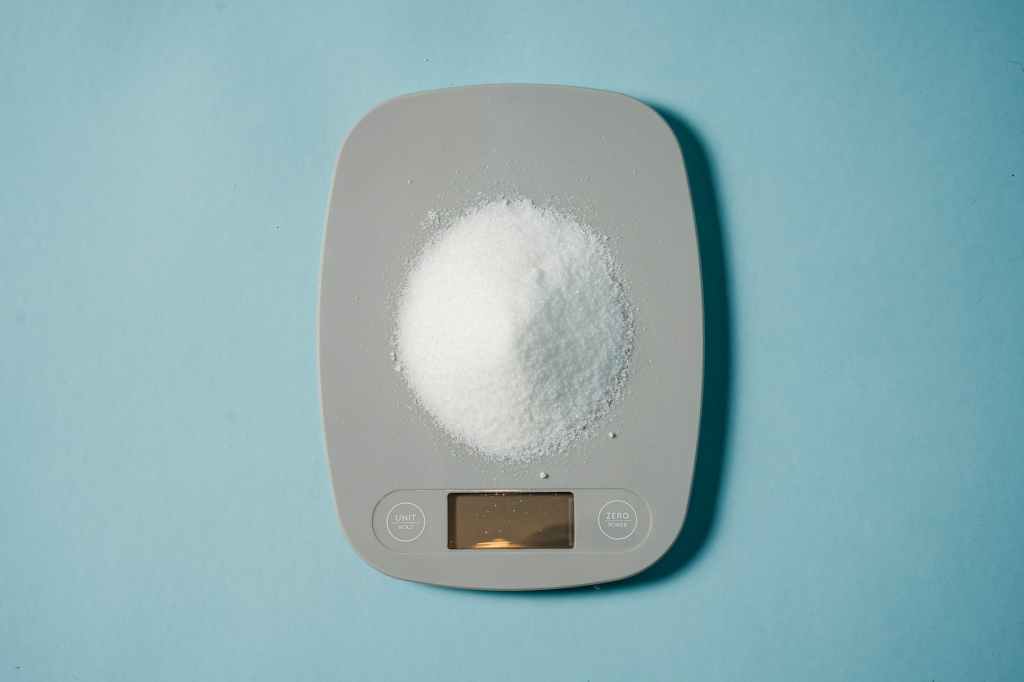
Tracking macros can be done by hand with pencil and paper or by using a spreadsheet, but I would recommend using an app. The three essentials for accurate macro tracking are an app of your choice, a food scale, and nutrition labels. If you are serious about your fat loss goals, a food scale will be necessary in order to calculate your serving size to the nutrition label. For example, a serving size of pasta is 56g uncooked. If you are eating a bowl of pasta at 100g uncooked, you will need to multiply each of the macros (as well as the other data like cholesterol, sodium, vitamins, etc.) by 1.79 (100/56). An app will help you to do this easily, but often you need to check to ensure the data in the app matches the nutrition label of what you are eating. I tend to input all of my foods manually even if they are already in the app just so that I know I have the accurate data for each food from each brand.
My recommendations for macro tracking apps are paid apps as they enable you to do more. I recommend MyMacros+, Cronometer, or Macro Factor (which is more expensive as it is more like a diet coach and requires a subscription. It uses AI to calculate your calories as you go). You can use the classic MyFitnessPal, but be wary of it adding back your calories from exercise or giving you insanely low calories.
Do I need to track calories or macros to lose fat?
Overall, you do not need to track calories or macros in order to lose fat. While it would certainly help, you can still be in a necessary deficit without tracking. It may be more difficult to know if you are in a deficit, and it gives you less data points to work with, but that’s not to say that it can’t be done.
You can also track calories and macros for staying at maintenance calories or a bulking phase. You don’t have to want to lose weight in order to want more awareness of what you’re consuming. Tracking calories can help with nutrition goals of any kind.
*If tracking your calories can be triggering or if you become fixated on the numbers, it may not be for you. Though if tracking is likely to be triggering, entering a calorie deficit without supervision may not be for you either.
If you have a fat loss goal and are ready to take action, check out my online fitness coaching which starts at only $149 a month. I will help to answer any questions you may have about fat loss, calorie deficits, and teach you to track macros. Fill out this consultation form to set up an introductory call and become one step closer to reaching your goals and being equipped with information for life, or click here to learn more about coaching.
Sign up for my email list at the bottom of the page so you never miss any FREE information from me and are notified every time I post a blog. Don’t worry, I won’t spam you or bother you to sign up for coaching.
 Gladden Gains Fitness
Leave a comment